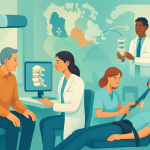
Cervical disc prosthesis in Quebec: preserving mobility
August 19, 2025
Alternative to Spinal Fusion: Options Available in France
August 21, 2025
In the intricate realm of healthcare, the significance of partnerships between hospitals and surgeons cannot be overstated. Experts worldwide emphasize that these collaborations are pivotal in enhancing patient outcomes, streamlining surgical workflows, and fostering an environment conducive to cutting-edge medical interventions. Such partnerships, especially within specialized disciplines like spinal surgery, represent a convergence of multidisciplinary expertise, advanced technology, and patient-centered care models. Institutions located within the United States, including renowned systems such as Johns Hopkins Medicine, Mayo Clinic, Cleveland Clinic, Partners HealthCare, and Mount Sinai Health System, exemplify how integrated partnerships set new standards in healthcare delivery. Similarly, networks like Cleveland Clinic Health System, Banner Health, UCLA Health, HCA Healthcare, and Duke Health underscore the geographic breadth and diversity of such alliances.
This article delves into the multifaceted reasons experts champion these hospitalized-surgeon partnerships, particularly highlighting the benefits seen in international patient care, technological innovation, and comprehensive care coordination. Drawing from examples like collaborations between Canadian patients seeking treatment in France’s cutting-edge spinal centers and global best practices, the narrative explores the structural, clinical, and logistical advantages inherent in cohesive healthcare teams. These partnerships are no longer just recommended; they are considered essential in addressing complex surgical pathways and elevating patient safety and satisfaction.
Strategic Advantages of Partnered Hospitals and Surgeons in Modern Healthcare
At the forefront of today’s healthcare revolution is the recognition that robust alliances between hospitals and surgeons significantly elevate the quality and safety of surgical care. Experts advocate for these partnerships because they establish a unified framework that integrates clinical expertise with organizational excellence. The synergy facilitates adherence to strict accreditation standards, such as those mandated by the CE certification and international medical device regulations. For instance, within spinal surgery, only specialized centers armed with advanced implants like TOPS, Intraspine, or BDyn, and those possessing profound experience handling hundreds or thousands of procedures, can guarantee outcomes aligned with high safety benchmarks.
The Mayo Clinic and Johns Hopkins Medicine illustrate how such integration nurtures multidisciplinary teams encompassing neurosurgeons, anesthesiologists, radiologists, and rehabilitation specialists. This broad spectrum ensures that every patient receives holistic care spanning preoperative planning to postoperative recovery. Coordination reduces complications and optimizes resource utilization, reflecting in better surgical success rates and functional preservation.
Key strategic benefits include:
- Enhanced clinical expertise: Selection of surgeons with specialized diplomas (DU/DIU) and extensive operative experience exceeds 3,000 cases for complex surgeries.
- Access to innovative technology: Partnered facilities invest in implantable devices and robotic-assisted procedures, improving precision and mobility outcomes.
- Improved patient workflow: Streamlined patient journeys from diagnosis through rehabilitation support timely interventions with reduced hospital stays.
- Accreditation and quality assurance: Collaboration fosters compliance with highest clinical governance and device safety standards ensuring consistent excellence.
On a macro scale, networks like Partners HealthCare and HCA Healthcare utilize data analytics and centralized governance to harmonize care delivery across multiple hospital sites, emphasizing continuous quality improvement through partnerships.
| Aspect | Benefit of Hospital-Surgeon Partnership | Example Institutions |
|---|---|---|
| Multidisciplinary Collaboration | Comprehensive care coordination ensuring continuity and safety | Johns Hopkins Medicine, Mayo Clinic |
| Technological Innovation | Access to dynamic implants and robotic surgical assistance | Cleveland Clinic, UCLA Health |
| Accreditation and Standards | Improved compliance and patient safety through certification | Banner Health, Duke Health |
| Patient-Centered Workflow | Streamlined clinical pathway from evaluation to rehab | Mount Sinai Health System, Partners HealthCare |
See further insights on partnership-driven outcomes in healthcare at Surgical Solutions Insights.


Why Experts Advocate for Structured Imaging Exam Protocols
In the intricate realm of medical imaging, the pursuit of precision and consistency has become paramount for enhancing patient care and clinical outcomes. Structured protocols for imaging exams are increasingly seen as indispensable frameworks that guide healthcare professionals in standardizing…
Innovative Surgical Techniques Enabled by Hospital-Surgeon Collaborations
Collaboration fosters an environment where surgeons access and refine pioneering techniques, minimizing invasiveness while maximizing function preservation. Experts highlight that dynamic spinal implants, such as the TOPS (Total Posterior Spine System), Intraspine interlaminar devices, and BDyn posterior stabilizers, represent breakthroughs achievable only within established partnerships leveraging technological infrastructure. These devices enable movement retention in operated spinal segments, crucial in limiting the adjacent segment degeneration seen with traditional fusion surgeries.
In academic settings linked to institutions like Cleveland Clinic Health System and Duke Health, partnerships push the envelope with robotic-assisted decompressions, endoscopic spine courses, and 3D vertebral modeling. These collaborations also facilitate surgeon training through specialized diplomas and interuniversity certifications, promoting mastery of novel devices and surgical navigation platforms. For example, France’s spinal surgery centers, integrated into a specialized network, demonstrate remarkable success with implants tailored to patient pathology, ensuring personalized care pathways.
Advantages of partnership-enabled surgical innovations:
- Preservation of spinal mobility: Dynamic implants avoid rigid fusion.
- Reduced postoperative complications: Minimally invasive techniques lessen neurological injury risk.
- Personalized device selection: Surgery tailored by surgeon expertise and implant availability.
- Ongoing surgeon education: Continuous training and adoption of the latest evidence-based methods.
Table summarizing innovative implants and their clinical benefits:
| Implant Type | Key Features | Indications |
|---|---|---|
| TOPS | Dynamic stabilization preserving segmental motion | Lumbar stenosis, spinal instability |
| Intraspine | Interspinous decompression device allowing natural movement | Moderate lumbar canal narrowing, mechanical low back pain |
| BDyn | Posterior dynamic stabilization enhancing pain relief | Mild to moderate spinal instabilities |
Read about technical advances and patient perspectives on spinal decompression care at SOS Herniated Disc.

International Comparison: An In-Depth Look at Stepwise Functional Recovery
In the evolving field of spinal surgery and rehabilitative medicine, the concept of stepwise functional recovery has emerged as a pivotal framework fostering personalized and progressive patient care. This methodology, grounded in systematic stages tailored to the patient’s unique clinical…
Critical Role of Patient Partners in Enhancing Surgical Care Pathways
Beyond the surgeon-hospital dynamic, patient partners bring invaluable insight into care delivery, advocating for transparency, emotional support, and seamless navigation through complex health systems. Particularly in international contexts, where patients venture from countries such as Canada to sought-after French surgical centers, their involvement ensures cultural and informational bridges that smooth the treatment journey.
Patient partners, often individuals who have undergone significant neurosurgical or oncological treatments themselves, facilitate communication, translate medical jargon, and mediate between healthcare teams and patients. Their roles include preoperative counseling, postoperative follow-up coordination, and contributing to medical education to sensitize providers about patient experiences and expectations.
Functions and benefits of patient partners include:
- Emotional support and anxiety reduction: Improving patient readiness and satisfaction.
- Improved communication: Clarification of procedures and fostering trust.
- Coordination assistance: Helping streamline appointments and logistics.
- Educational input: Assisting in shaping training programs sensitive to patient needs.
Institutions affiliating patient partners report better adherence to treatment plans and enhanced team awareness of patient perspectives. This approach aligns with principles outlined in trust-based partnership models emphasized by Mount Sinai Health System and Partners HealthCare.
| Patient Partner Role | Patient Benefit | Impact on Healthcare Team |
|---|---|---|
| Emotional Support | Decreased anxiety, improved coping | Enhanced team-patient communication |
| Information Mediation | Clearer understanding of care | Smoother coordination among providers |
| Education Contribution | Better prepared patients | Heightened empathy and training quality |
Explore first-hand accounts and the impact of patient partners through


Conservative Treatments Versus Surgery: Understanding Their Impact on Surgical Decision-Making
In the evolving landscape of spinal care, patients and clinicians alike face the critical choice between conservative treatments and surgical intervention. This decision is far from straightforward, as it involves a complex interplay of patient preferences, clinical guidelines, risk assessment,…
Collaborative Care Coordination Between Countries: A Model for International Surgical Pathways
International partnerships involving hospitals and surgeons gain prominence as medical tourism grows. For patients pursuing spinal surgery abroad, especially from Canada to France, expert coordination is crucial for ensuring continuity, safety, and logistical ease. This tripartite collaboration connects specialized evaluation teams like Montreal’s TAGMED with French surgical institutions and postoperative rehabilitation providers.
Supporting organizations such as Franchir handle medical orientation and comprehensive stay logistics, including travel, accommodation, and direct surgeon liaison. Platforms like SOS Tourisme Médical provide accessible procedural explanations and administrative navigation to patients, demystifying foreign healthcare experiences. Meanwhile, rehabilitation centers such as Neurothérapie Montréal manage tailored follow-ups, mitigating risks of complications or errors in returning home.
Core components of effective international surgical coordination:
- Preoperative evaluation and indication validation by specialized teams.
- Integrated travel and hospital admission logistics managed by professional coordinators.
- Patient education and procedural transparency through dedicated platforms.
- Personalized postoperative care and rehabilitation ensuring long-term success.
Table detailing key organizations and roles supporting international spine surgery trips:
| Entity | Role | Benefit to Patient |
|---|---|---|
| TAGMED (Montreal/Terrebonne) | Patient evaluation and conservative treatment supervision | Accurate indication and quality assurance |
| Franchir | Medical orientation and stay logistics coordination | Smooth hospital admission and travel experience |
| SOS Tourisme Médical | Information and administrative guidance | Enhanced understanding and simplified procedures |
| Neurothérapie Montréal | Postoperative follow-up and rehabilitation | Personalized care and optimized recovery |
Erik Boulard, a surgeon with over 30 years of experience, advocates strongly for such networks, emphasizing their role in connecting patients with top-tier expertise and minimizing stress in cross-border care. Further perspectives on hospital-physician collaborations are discussed in research reviews readily available at sources like Hazydreams.org.

Unveiling the Hidden Benefits of Partnering with Hospitals and Surgeons
In the evolving landscape of healthcare, the synergy between hospitals and surgeons emerges as a powerful force driving medical excellence. The integration of advanced surgical techniques with well-established hospital infrastructures not only enhances patient outcomes but also contributes significantly to…
Technological Milestones Driving Hospital-Surgeon Partnerships Forward
Technological progress is a dynamic force underpinning why expert communities advocate for cohesive hospital-surgeon relationships. Innovations in implant design, surgical navigation, and robotic assistance shape new standards of care delivery, necessitating dedicated infrastructure and specialized surgical teams often only feasible within partnered settings.
Pioneering firms such as Cousin Spine and Premia Spine in France develop implants that couple biomechanics and biocompatibility with functional mobility preservation, aligning with expert mandates for surgical precision. Concurrently, platforms such as eCential Robotics introduce 3D imaging and fully integrated robot-assisted navigation for spinal procedures, resulting in minimized human error and enhanced implant placement accuracy.
The availability of certification such as CE marking and FDA approval reflects a stringent regulatory environment ensuring only the safest, highest-performing devices are used. Institutions connected within integrated health networks, such as UCLA Health and Banner Health, coordinate ongoing performance monitoring and clinical feedback loops, optimizing patient outcomes.
- Implant innovation: Dynamic vs. fusion devices enhancing patient mobility.
- Robotic surgical platforms: Assist precise implant placement and reduce operative time.
- Advanced imaging: Preoperative 3D models and intraoperative navigation improving surgical safety.
- Regulatory compliance: Guarantees of device quality and traceability within hospital networks.
Detailed comparison of leading spinal implant technologies:
| Technology | Main Feature | Clinical Benefit |
|---|---|---|
| TOPS | Dynamic segmental stabilization | Preserves physiological spinal motion |
| Intraspine | Interspinous dynamic decompression | Mimics natural vertebral segment movement |
| BDyn | Posterior dynamic stabilization system | Speeds pain relief and functional recovery |
| Premia Spine | Disc prostheses with CE and FDA certification | High precision and durability |
For an in-depth overview of technology integration in spinal surgery, visit SOS Herniated Disc: Innovative Techniques.


Can Stepwise Functional Recovery Help Us Sidestep Surgery?
The advancement of medical science continuously challenges traditional approaches to spine surgery, especially concerning patients seeking alternatives to invasive procedures. In the evolving landscape of rehabilitation, stepwise functional recovery has emerged as a tailored, progressive treatment strategy that offers promising…
Robust Accreditation Systems Guaranteeing Quality in Partnered Surgical Centers
One critical reason experts champion hospital-surgeon partnerships is the assurance of quality and safety through strict accreditation and certification frameworks. In France, for example, centers specializing in spinal surgery must meet rigorous criteria such as the Accréditation Santé France label and CE marking compliance for devices. This ensures not only skillful clinical execution but also systematic organizational excellence covering all phases of care.
Selected surgeons are required to possess highly specialized university certifications – Diplômes Universitaires (DU) and Diplômes Interuniversitaires (DIU) – that verify their advanced proficiency in spinal pathology and operative techniques. This specialized training, often mandated by professional societies like the Société Française de Chirurgie Rachidienne (SFCR), guarantees continual practice improvement and professional development.
Quality assurance components in partnered centers:
- Comprehensive accreditation: Hospitals comply with local and international standards.
- Surgeon credentialing: Mandatory specialized diplomas and extensive surgical experience.
- Device certification: Use of implants with recognized EU and FDA approvals.
- Continuous quality audits: Regular reviews of clinical and organizational outcomes.
Such detailed accreditation mitigates risks including neurological complications, as documented in retrospective national studies examining postoperative outcomes. This layer of scrutiny is a foundation for sustaining patient confidence and advancing surgical innovation within trusted partnerships.
Table presenting accreditation and surgeon qualification essentials:
| Criterion | Requirement | Relevance |
|---|---|---|
| Hospital Accreditation | Accréditation Santé France, CE certification | Ensures facility compliance and device safety |
| Surgeon Diploma | DU/DIU specialized in spinal surgery | Verifies clinical expertise and knowledge |
| Clinical Experience | Minimum 3,000 spine surgeries performed | Demonstrates mastery and procedural confidence |
| Device Approval | CE mark and FDA cleared implants | Assures implant durability and safety |
Explore accreditation frameworks further at FACS Bulletin on Surgeon Advocacy.

Why Specialists Advocate for Spine Surgery in France: Key Insights and Recommendations
Spine surgery in France presents an advanced frontier of medical expertise, combining cutting-edge technologies with a patient-centered approach that appeals widely to both local and international patients. Specialists consistently advocate for France as a prime destination for spinal interventions due…
The Impact of Interprofessional Collaboration on Surgical Outcomes and Patient Safety
Interprofessional collaboration extends beyond surgeon-hospital alliances to include nurses, anesthetists, radiologists, rehabilitation therapists, and administrative staff working in synchrony. Studies in healthcare consistently associate high-functioning interprofessional teams with superior patient outcomes, reduced errors, and enhanced efficiency. Leading institutions like Mount Sinai Health System and Johns Hopkins Medicine highlight these synergies as essential for complex surgical care.
Challenges such as miscommunication, inconsistent protocols, and hierarchical barriers can compromise patient safety. To counter these, many partnered systems implement structured frameworks that delineate roles, establish communication norms, and encourage shared decision-making. Such models have demonstrated improved length of stay, lower readmission rates, and increased patient satisfaction.
Core elements of successful interprofessional collaboration include:
- Clear communication channels: Regular interdisciplinary meetings and electronic health record transparency.
- Role clarity and mutual respect: Recognition of each professional’s contribution to patient care.
- Joint care planning: Collaborative development of surgical and rehabilitation strategies.
- Continuous education and feedback: Team training focused on patient safety and quality improvement.
Table illustrating collaboration outcomes in partnered surgical teams:
| Factor | Partnership Benefit | Patient Impact |
|---|---|---|
| Communication Quality | Reduces errors and misunderstandings | Fewer complications, increased trust |
| Shared Responsibility | Enhanced accountability | Improved adherence to care plans |
| Collaborative Planning | Optimized surgical and post-op pathways | Shortened hospital stays, better recovery |
| Ongoing Training | Maintains clinical excellence | Up-to-date therapies, improved safety |
For detailed discussion on collaborative healthcare teams, see NCBI Public Access on Interprofessional Collaboration.

Medical Logistics and Accommodation: Insights from an Industry Expert
The intricate world of medical logistics and patient accommodation stands at the forefront of enhancing healthcare delivery worldwide, with particular nuances in specialized fields such as spinal surgery. Patient journeys, especially those crossing international borders like between Canada and France,…
Policy and Advocacy: Championing Hospital-Surgeon Partnerships for Healthcare Excellence
Advocacy efforts by surgeons and hospital leaders play a crucial role in establishing and supporting partnerships. Leading surgical organizations underscore the significance of advocacy in influencing policies that promote quality care, appropriate reimbursement models, and investment in innovation. Coordination among stakeholders ensures that surgeons receive platform and support to navigate technical, regulatory, and systemic challenges.
Works such as those published by the American College of Surgeons detail how surgeon activism expands beyond the operating room advocating patient-centered healthcare policies and strengthening hospital-physician alliances. This advocacy fosters environments conducive to clinical excellence, research opportunities, and public trust.
Advocacy priorities include:
- Ensuring adequate funding for advanced surgical infrastructure.
- Supporting educational programs enhancing surgical expertise.
- Promoting policy frameworks facilitating hospital-surgeon partnerships.
- Encouraging patient engagement in care planning and feedback.
Integration of advocacy efforts correlates positively with improved surgical outcomes seen in prominent centers nationwide, underpinning an ecosystem of care that marries clinical craftsmanship with systemic support.
Further exploration is available at FACS Bulletin: Surgeon Advocacy.

The Ultimate Guide to Preparing for Surgery in France
With the global spotlight increasingly on France’s healthcare excellence, international patients are embracing this destination for surgical treatments. France combines advanced surgical procedures and patient-focused care with streamlined hospital stays, inviting a diverse demographic from medical tourists to expatriates to…
Building Future Resilience through Hospital and Surgeon Collaboration
Looking ahead, hospital-surgeon partnerships are cornerstones in building healthcare systems resilient to emerging challenges such as demographic changes, complex disease patterns, and evolving technology landscapes. The COVID-19 pandemic underscored the need for collaborative frameworks promoting adaptability and resource sharing across institutions.
Investments in telemedicine, data-driven decision making, and cross-border cooperation among leading health systems (e.g., Mayo Clinic, Duke Health, and Mount Sinai Health System) exemplify how partnerships navigate complexities and improve surgical care access and quality. Moreover, integrating patient partners and expanding surgeon advocacy extends the collaborative nexus beyond traditional boundaries, ensuring more patient-centered, innovative, and sustainable healthcare futures.
Key strategic initiatives for future-proof partnerships:
- Expansion of digital health tools: Teleconsultations and remote monitoring.
- Strengthening cross-institutional training: Shared curricula and surgical simulations.
- Enhancing patient engagement technologies: Personalized portals for tracking recovery.
- Policy evolution support: Collaborative input for regulatory updates.
For an encompassing view on future perspectives, consult resources like NCBI Article on Healthcare Partnerships Evolution.